Note: This is one in an occasional series of interviews with Colorado journalists.
By Ed Otte
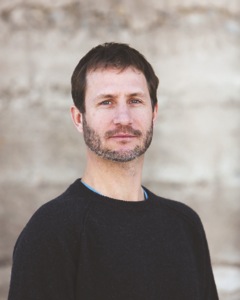
Brian Calvert of High Country News
Headquartered in a small town in Western Colorado, High Country News has a big regional reputation for environmental news coverage.
The Paonia-based multimedia news outlet produces a 29,000-circulation biweekly publication, website (www.hcn.org) and syndication service featuring cultural, environmental and natural resources stories from Montana to Texas and from the West Coast to the Great Plains.
Founded in 1970, the 501(c)3 nonprofit has grown in stature while collecting a number of national awards – the Utne Media Award, George Polk Award, Science in Society Award, Native American Journalists Association Best Environmental Story and Society of Environmental Journalists Award.
HCN won five writing awards, including four first places, in the 2014 Society of Professional Journalists Region 9 competition.
HCN’s Writers on the Range program generates popular op-ed columns that appear in weekly newspapers, small and large daily newspapers and on a variety of websites. In addition to its stable of writers, syndicated Boulder cartoonist Rob Pudim contributes opinion articles to WOTR.
Two members of the HCN staff, senior editor Jonathan Thompson and associate editor Brian Calvert, received Ted Scripps Fellowships to attend the Center for Environmental Journalism at CU-Boulder.
CEJ director Tom Yulsman cites the reasons for HCN’s success.
“Thanks to world-class writers and editors, High Country News covers the West more comprehensively and incisively than any other publication,” Yulsman said.
“And long before other news outlets began scrambling for new business models in the face of tumultuous change, HCN had already pioneered an independent, nonprofit approach that has, in fact, been key to their impressive journalistic success.”
Thompson was HCN editor-in-chief from 2007-2010. He lives in Durango where he writes articles for HCN. Calvert , a 1994 graduate of the University of Northern Colorado in Greeley, worked in Cambodia, China and Afghanistan before moving to Paonia in May 2014 after the Scripps fellowship.
Question: What is the most controversial story HCN has run?
Calvert: Ed Marston’s 1990s special issue on a Brothers, Oregon, ranching couple, Doc and Connie Hatfield. They’d become environmentalists, which made them radicals among other public-land ranchers. But they were also highly successful, starting a co-op, Oregon Country Beef, of more than 100 other ranchers. They were taken up by Whole Foods, selling hormone and antibiotic-free beef, plus the marketing sizzle of everybody involved — and that included the wives to a large extent — working for healthy land that was not overgrazed. “Pure” environmentalists found their approach hard to believe and still wanted public land to be cattle free. Other ranchers criticized their approach as unrealistic and too demanding of cooperation. Feedback was fabulous.
Q: What is the most difficult environmental story to cover?
Calvert: Climate change. The immensity of the problem does not lend itself to great storytelling, and so you have to break it into smaller pieces. The problem is the uncertainty embedded in any little piece. If you were covering a war, you might cover a battle, or retreat, or a band of refugees moving across the border—and in that you would have something tangible and relatable to your audience. With climate change, if you start talking about a singular event—a hurricane, say—you start getting into real trouble if you attach it to climate change. Yes, the hydrological cycle will be affected by warming air temperature. No, you can’t say any one hurricane is caused by it.
Meanwhile, even if you could get folks to emotionally connect with climate change, you’d have the problem of paralysis among people as to what should happen next. What do we do about it? Can we even solve it? The answer is: not yet. But we have to be the ones applying pressure to the wound, so that when the docs get here—the future, smarter generations—they’ll have a shot at turning things around.
Q: What is the most under-reported environmental story?
Calvert: All of them. Environmental reporting, as a sub-section of journalism, is melting into general reporting, economics reporting and other beats. That means, as with many beats, we don’t have enough experts watchdogging those agencies and entities that are supposed to protect our environment—our water, air and other basic amenities. The environmental movements of the 1970s, from which, arguably, High Country News was born, are not the same as they were. Information has been scattered through the prism of the Internet, and perhaps so too have attitudes that led to direct action and bring about change in the past. We’re information heavy and action light, these days. And not just where the environment is concerned.
Q: How do you recruit contributing editors and correspondents?
Calvert: Many of our contributing editors and correspondents were once interns here. The magazine has a very specialized niche, in which we tell the story of the modern West through the lens of its natural resources and environment—those things that make the region unique. We are not an environmental magazine, per se, so our editorial needs are often best met by writers and editors who have some experience with us and understand our nuanced approach to these issues.
Q: How do you recruit people for the Writers on the Range program?
Calvert: Writers on the Range, edited by Betsy Marston since 2002, takes the approach that if you care about Western issues and have done some homework, you can write a convincing opinion piece. She says: “My job is to help all writers, skilled or not, make their argument clearly and effectively. I like to see a draft to make a decision about whether it’s worth my time pursuing. Occasionally, I ask a writer to do a piece about a hot subject. I send out three op eds every Monday to some 50 papers in the region, including HCN.”
Q: With a network of writers across the West, what is the operation in Paonia? (The town, population 1,500, is known for its orchards and wineries. Annual community events include the Paonia Cherry Days Festival and Mountain Harvest Festival.)
Calvert: We’ve always been small, in terms of headquarters. In 1983, the magazine was based in Lander, Wyoming, and its small staff all quit, leaving the nonprofit board with a decision: Where would HCN go? Ed and Betsy Marston, who’d moved to Paonia from New York for “a year off,” were chosen to run the paper. Self-described workaholics, they had already founded and run a weekly county paper and a regional paper. So with $12,000 in the bank from the Lander crew, they restarted the paper. They hired their first intern plus a part-time development director, and a typesetter, and were off and running. Ed retired as publisher in 2002. Betsy moved from editor to WOTR editor and Heard around the West writer the same year.
We run a small editorial team here, now, led by Publisher Paul Larmer and Managing Editor Jodi Peterson, and including myself, associate editor, an online editor, Tay Wiles, and a social media coordinator, Gretchen King. We have two interns and a fellow, who help with research and writing. We have an art director, Cindy Wehling, and associate designer, Brooke Warren. And that’s it. For the most part, we rely on a network of freelancers, correspondents and contributing editors, who are our eyes and ears across the region. They know what’s important and what’s moving in their areas, and they keep fresh ideas coming.
Q: You offer free digital subscriptions to students and you provide internships, including a “journalism boot camp” in Paonia. Is this part of an effort to attract younger readers and staffers?
Calvert: Absolutely. High Country News has a loyal readership that is very savvy about Western issues and very educated. We want to keep that readership revived, through younger readers interested in these issues, and we want fresh takes on the West, which comes from younger writers eager to learn.
Q: What is the HCN business model? In addition to paid subscriptions and donations, how much revenue is generated from other news organizations using your material?
Calvert: We have subscribers, who are also often our most faithful donors, and we have some paid advertisers, as well. Our business model is a nonprofit model, and so we also rely on funding from foundations that value in-depth stories on complex issues in the West. We run a syndication service to about 70 news outlets around the West.
Q: Is the future of HCN paid digital subscriptions rather than a combination of print and digital subscribers?
Calvert: To us, it’s the combination. We believe in good storytelling, presented either in print or online. We use the print magazine to give the deep dives and hard looks our readers have supported for decades, in a tried and true format you can read in your easy chair. And we use our online presence to react quickly to events that are of interest to our readers. We engage across multiple media platforms, and we think we have a formula that works—and will keep working.
Discover more from Society of Professional Journalists | Colorado Chapter
Subscribe to get the latest posts sent to your email.
 Society of Professional Journalists | Colorado Chapter
You must be logged in to post a comment.