Note: This is one a series of interviews with Colorado journalists.
By Ed Otte
More than 3,000 high school student journalists from around the country are expected to attend the Spring National High School Journalism Convention April 16-19 at the Sheraton Denver Downtown Hotel.
The semiannual event for students and advisers is sponsored by the Journalism Education Association and its convention partner, the National Scholastic Press Association.
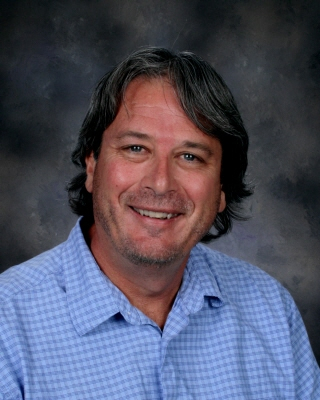
Mark Newton
Founded in 1924, JEA is the largest scholastic journalism organization for teachers and advisers with 2,500 members. It is headquartered at Kansas State University and JEA executive director Kelly Furnas is an assistant professor of journalism on the faculty of the A.Q. Miller School of Journalism and Mass Communications. Kansas State also provides JEA with office space. staff support and access to campus services.
JEA President Mark Newton is the student media adviser and a journalism teacher at Mountain Vista High School in Highlands Ranch. He is also a member of the Colorado High School Press Association and the Colorado Pro Chapter of the Society of Professional Journalists.
Question: What will be the emphasis of the convention?
Newton: The emphasis at this convention is the same as every one of our national conventions. We want students and advisers to have a variety of opportunities to hone 21st century skills, network, and share in the experience and energy of so many like-minded individuals. What is unique to the Denver convention is our “One Story” – the Colorado Springs Gazette’s four-part series “Other than honorable,” which examined how wounded combat veterans were mistreated, focusing on loss of benefits for life after discharge by the Army for minor offenses. The story won the 2014 Pulitzer Prize for national reporting. (New York Times reporter Dave Philipps, who wrote the Gazette series in 2013, will be a keynote speaker. Philipps received the SPJ Colorado Pro Chapter Journalist of the Year Award in April 2014.)
Question: Is interest in journalism increasing or declining at the high school level?
Newton: That’s a tough question to answer because it is so hard to collect specific data from every high school in the country. Anecdotally, I think it is increasing as administrators, parents, the public, employers and the students themselves are seeing all the benefits of what student media can offer. Student media is 21st century English – authentic and non-fiction based. Student media is the 21st century educational skills of communication, collaboration, creativity and critical thinking that every employer wants.
Question: Is social media a more appealing method of communication for students than traditional reporting?
Newton: Social media is one tool – of many! – afforded to a journalist to communicate. I don’t think it’s necessarily more appealing (one could be), but it is becoming more and more relevant. What I love about the journalism/media world today is that we’re constantly trying to figure it all out. We need to create, find, experiment and adapt the tools to communication. We need to find the audiences and develop methods to reach them where they are at and deliver relevant information when they want, we need to find the news and the individual stories to tell them. Make no mistake, social media is part of that, but so is more traditional media like print and broadcast. What’s cool is that high school journalism programs are giving future journalists a start. And, as an educator, I believe that spark is well worth the effort to have a viable, well-funded and well-staffed student media program in every high school in America.
Question: How should high school students prepare for journalism studies in college?
Newton: High school students need to be well versed in a variety of the skills required to be successful. We can’t think of our high school students as on the newspaper, or yearbook, or broadcast. We must empower our students to be journalists first, then figure the best method or methods to deliver the content. We also need to prepare them to push back against authority and question. We need to teach them to work together. We need to teach them to fail – and bounce back even higher than before. And, probably most importantly, we need to teach them that they have a voice – an important voice – and they are obligated in a democracy to share it.
Question: What career advice to give students interested in journalism?
Newton: Be good at everything and great at something. Students must learn how to produce content across different media. How does a story look in print? On a website? With or without photos? How many photos? And, all that. Learn how to code – and master WordPress. Be fearless. Question The Man. Fail fast and try again. And, most importantly, create experiences for yourself. You can’t photograph a concert at Red Rocks unless you ask. You can’t learn code unless you start. You can’t find the story unless you talk to people.
Question: University of Northern Colorado journalism professor Lee Anne Peck participated in a journalism education study and wrote chapters for “Still Captive? History, Law and the Teaching of High School Journalism.” She said funding – for computers and updated software – is one of the biggest problems for high school journalism teachers and advisers. Do you agree?
Newton: Funding impacts all of education, including scholastic media. As journalists know, it’s always about the money. It’s really sad because a school with a well-funded journalism/media program is so much better off. Constituents – from taxpayers, to parents, to the students themselves – win big when a school can showcase its successes and address its failures with a qualified teacher. And, the amazing thing is those stories are being told using the very skills that the school is teaching. Talk about authentic! Talk about real-world! Talk about pride! We’re spending a lot of money and energy in education now to create courses that are 21st century, skill based, authentic and meaningful. And, right down the hall it’s already happening – has been for years! – in the journalism/media room.
Question: Based on your experience, what are the other challenges facing scholastic journalism?
Newton: Funding, for sure. Finding qualified teachers/advisers is probably number one (“Oh, you read the newspaper, you’re the newspaper adviser!” – probably not what happens when the school needs a football coach: “Oh, you watch the Broncos, you’re the head football coach!”) and supporting these teachers/advisers with meaningful professional development (JEA and CHSPA are the saviors!); in many schools, the journalism teacher is all alone in teaching that content – and often saddled with English or art or business or other courses. Another challenge is the constant pressure of prior review/restraint, the censorship (and the, what I could call, bullying) that goes with it (we have to be “perfect” or we’re going to get sued!).
Discover more from Society of Professional Journalists | Colorado Chapter
Subscribe to get the latest posts sent to your email.
 Society of Professional Journalists | Colorado Chapter
You must be logged in to post a comment.