This is one in a series of interviews with Colorado journalists. A downloadable PDF of the SPJ Code of Ethics is available at spjcolorado.com. Click the SPJ Code of Ethics link in the home page menu bar to access the Code.
By Ed Otte
 Seek Truth and Report It.
Minimize Harm.
Act Independently.
Be Accountable and Transparent.
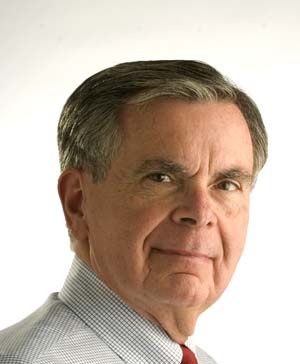
Those four principles provide the framework for the Society of Professional Journalists Code of Ethics. A key figure in the evolution of the code – and a strong advocate for adhering to the guidelines – is Denver journalist Fred Brown.
The former Denver Post legislative reporter, editor and political columnist was president of the SPJ Colorado Pro Chapter and Region 9 director, and served as national president in 1997-98. He remains active with SPJ and is on the Sigma Delta Chi Foundation board of directors.
Editor of the fourth edition of “Journalism Ethics: A Casebook of Professional Conduct for News Media,” Brown is vice co-chair of SPJ’s Ethics Committee. He also teaches media ethics at the University of Denver.
Brown retired in 2002 as The Post’s capitol bureau chief after 39 years at the newspaper. A 1961 graduate of Colorado State University in Fort Collins, Brown was named to the CSU Media Hall of Fame in 2011. He is a past president of the Denver Press Club and was elected to the DPC Hall of Fame in 2003. That same year, The Post hired Brown back as a freelance columnist.
In 2006, Brown received the Wells Memorial Key, SPJ’s highest honor for his service to the organization. In his nomination letter for the award, SPJ past president Irwin Gratz wrote: “Fred Brown demonstrates how to use our SPJ Code of Ethics, not as a club, but as a tool to reason with other journalists and members of the public on thorny issues.”
Past president Paul McMasters wrote: “As an officer, board member and ethics committee chair, (Brown) championed professionalism at every turn, led at every key occasion and quietly reminded everyone who would listen of the importance of ethics.”
Brown will be on a panel discussing “Ethics in Newsgathering and Reporting” on April 24 during the SPJ Region 9 Conference on the Auraria campus in downtown Denver.
Question: Rolling Stone magazine has been criticized – most recently in a Columbia University Graduate School of Journalism report – for its November 2014 article about an alleged rape at the University of Virginia. The SPJ Code of Ethics states: “Diligently seek subjects of news coverage to allow them to respond to criticism or allegations of wrongdoing.” Why would a publication fail to follow that practice and print a one-source story?
Brown: This is a case where the admonition of the SPJ Code of Ethics to “Minimize Harm” seems to have trumped the “Seek Truth and Report it” principle. Usually it’s the other way around. As Sean Woods, who is identified as the lead editor on Sabrina Rubin Ederly’s 9,000-word “A Rape on Campus” story put it, Rolling Stone was “too deferential to our rape victim.” So the publication agreed to the source’s request not to contact her date that night, the other alleged perpetrators or the three people she said came to her assistance in the early morning hours after the alleged incident. That was clearly a mistake, as the Columbia report made clear. It’s also what I would call a case of “log infatuation.” As a reporter, you promote a story based on a premise you feel deserves attention, and then in your information-gathering you focus on information that supports that premise, and you pay less attention to inconvenient facts that argue against the outcome you’d pitched. This selective approach to available facts also is called “confirmation bias,” in more critical terms.
Question: How damaging was suspended NBC Nightly News anchor Brian Williams’ exaggeration about his war zone and Hurricane Katrina reporting? Can any journalist restore his or her credibility after such a misstep?
Brown: It certainly was damaging to his personal reputation. Does it damage the credibility of journalism generally? It certainly doesn’t help. Unfortunately, it has seemed to me for quite some time – and polling confirms it – that the general public doesn’t have a lot of faith in journalism, anyway. Today anyone can claim to be a journalist. And all of these seminars and advanced degrees and awards that professional journalists can incldue in their resumes don’t seem to carry much weight with the audience. Bloggers and bloviators have as much credibility with a large segment of the information-consuming audience as do those who really try to be impartial and thorough. Williams’ problem was a failure to keep his ego under control. Bill O’Reilly had the same problem with some of his reporting, but his Fox News management was not as concerned about making reparations as was NBC. I’d say NBC was a bit too acquiescent, and Fox was antagonistic and defensive about allegations against its major personalities. I don’t know if Williams will be back. O’Reilly, though, won’t go away.
Question: What effect do cable TV news programs and talk radio have on the public’s perception of journalistic ethics?
Brown: It’s mostly a negative effect. Cable news is driven by the necessity of finding headlines 24 hours a day, seven days a week – and sometimes that means relatively unimportant stuff gets as much attention as the truly significant. Talk radio is even more driven by the need to exaggerate whatever happens to be in the news – and then, to go further, to be outraged about it. It’s not just a problem of ethics, it’s a problem that negatively affects governance. Talk radio and cable news contribute to a public perception that nothing works as it should, especially government. And that’s an ethical problem. Sensationalism distorts the perception of what’s happening.
Question: Should ethics courses be taught in high school and college journalism programs?
Brown: Yes. Especially at the college level, where students have majors. I teach media ethics at the University of Denver. It’s a required course for journalism majors, as well as those who are majoring in strategic communications, which is what used to be known simply – and sometimes derogatorily, by journalists – as P.R. A combined course can be a challenge, but I’ve come to believe it’s a great idea. My approach is to teach how the two professions should work together, and when their goals and interests are in conflict, how to work toward a communications goal that benefits the greater public good. It’s not always easy, to say the least.
Question: What tough issues did the SPJ ethics committee face in revising the code in 2014?
Brown: The toughest issue we committee members faced was how to approach the challenges raised by often very vocal critics who felt that the whole structure of providing information to people has changed so drastically, with the proliferation of sources on the Internet, that perhaps the principles of providing information ought to undergo a wholesale revision, too. One of the major arguments was that the whole idea of being independent, of avoiding conflicts of interest, was too difficult to achieve in this new media environment, where sometimes the only way to survive financially is to have a sponsor. It was more important, critics said, to be “transparent,” disclosing inevitable conflicts of interest rather than trying to avoid them. In the end, the committee that spent more than a year revising the SPJ Code of Ethics – the last revision had been 18 years earlier, in 1996 – decided that basic principles are abiding, and they don’t change when the technology changes. So we tried to eliminate any language that could be construed as technology-specific and focused instead on broad principles. We wanted to write a “bible” or a “constitution,” not a step-by-step set of instructions or referees’ rules. And we finally did add “transparent” to the list of major principles – “Be Accountable and Transparent” – even though the code had through most of its existence included the principles that clearly could be described as promoting transparency. To deal with the ever-evolving nature of information-delivery technology, we decided to back up the basic Code principles with position papers and examples, accessible online, that will be updated much more frequently than the Code itself should be.
Question: In the 1980s the Rocky Mountain News had Jean Otto and then Bill Hosokawa serve as reader representative and ombudsman, respectively, to publicly respond to readers’ complaints about news coverage and to address ethical issues. Do you think news organizations today should provide a similar service – especially for questions involving ethics?
Brown: Yes. It’s a place for mature discussion of differences of opinion about how stories are handled. Online comment sections that are made available as appendages to published articles can devolve into mud holes of uninformed, mean-spirited, illiterate and misleading snark. The New York Times and The Washington Post are examples of newspapers that support, with their media staffs, adult, professional commentary and discussion on issues raised by their coverage. This is a good idea, and I wish more media outlets would do it. By the way, I was a media critic at the Rocky Mountain News for one weekend. In the summer of 2002, John Temple, editor-publisher-vice president, and Vince Carroll, the editorial page editor, signed me up. But the gig lasted only one week. I was informed on Monday, the day after my first media-critic column appeared, that my early retirement contract with The Denver Post contained a non-compete clause that wouldn’t expire for another six months. Thus ended my ombudsman-like foray. When the year expired, The Post signed me up to write a mostly political column, which I did for the next 10 years.
Discover more from Society of Professional Journalists | Colorado Chapter
Subscribe to get the latest posts sent to your email.
 Society of Professional Journalists | Colorado Chapter
Pingback: Save the Date for SPJ Regional Conference in Albuquerque | SPJ COLORADO PRO